For restaurants with tables
Tables, collection and delivery on one board
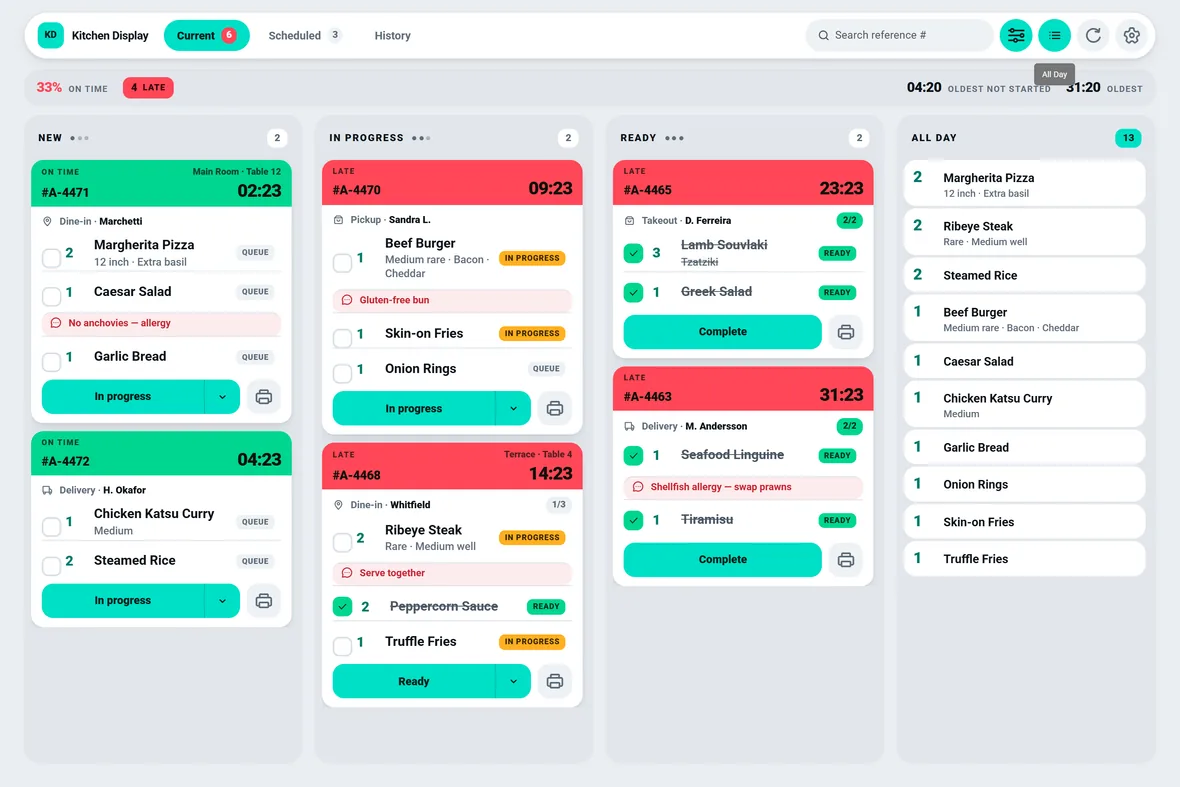
Dine-in tickets with the table on them, collections counting down to a slot, deliveries heading out with a rider — all on the same kitchen board, each judged against its own timing. Nothing on paper, nothing on a second system.
What matters most
Three things a dining room needs from its kitchen software.
One board, every service type
A dine-in ticket for Table 12 sits next to a delivery for Okafor and a collection for Bennett. Each carries its own caution and late thresholds, so the table is not held to the delivery’s clock.
The floor, in the same app
ZMerchant carries table service — rooms, tables, booths and terrace with live availability and covers — plus reservations, so a dine-in ticket reaches the kitchen with the table already on it.
A shift report that reconciles
Sales, orders, average basket, an hourly chart, card versus cash, and the dine-in / collection / delivery split — printable at the pass, so the till and the app agree at close.
The board
What a cook sees at half past eight.
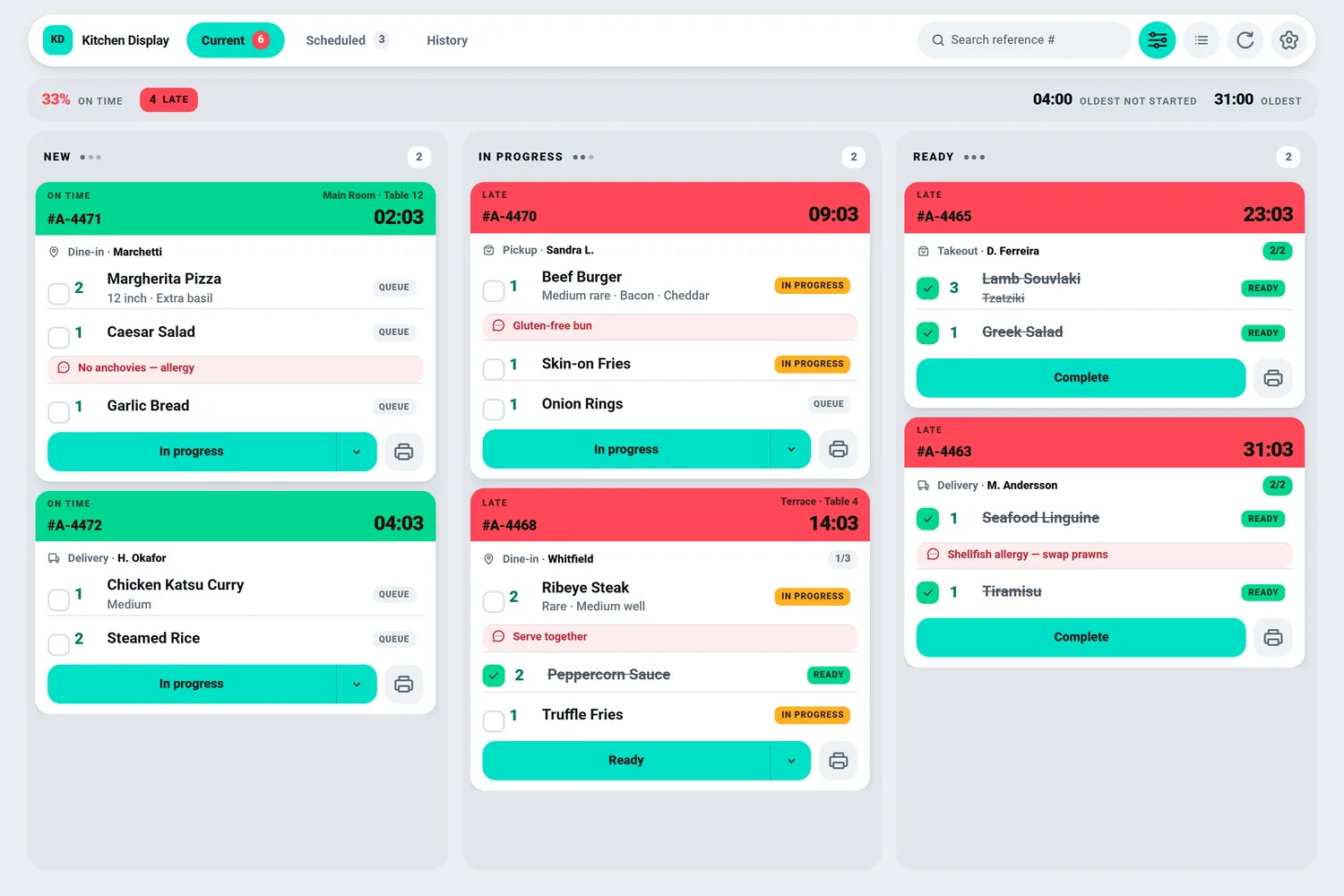
One view, three columns, and nothing to configure. Every open order is a ticket carrying its reference, service type, customer name and table.
- 1All-Day rail
The All-Day rail sums lines across every open order by product, keeping modifier combinations separate — so a station cook reads "make nine" instead of counting across tickets.
- 2Per-service thresholds
Set caution and late per service type. Dine-in and delivery are judged against their own numbers, and the Service Pulse rolls the same judgement across the whole board.
- 3Table on the ticket
Dine-in tickets carry the table and room. Walk-ins rung through the built-in POS land on the same board with the same band.

Booking to bill
The guest books on your site, orders from your menu, and pays through your gateway.
ZCustomer takes table reservations as well as orders. The same account carries saved addresses, order history, loyalty points and a wallet — so the person at Table 12 tonight is the same customer who orders delivery on Thursday, in your database rather than a marketplace’s.
Run one service on the board, then decide.
We import your menu, set your own stage names and timings per service, pair your printer, and run a full evening alongside whatever you use now.